

Most people do not have a discipline problem. They have a system problem. You wake up, promise today will be different, and by midafternoon you are back in the same habit. That does not mean you are weak. It means your behavior is running on autopilot.
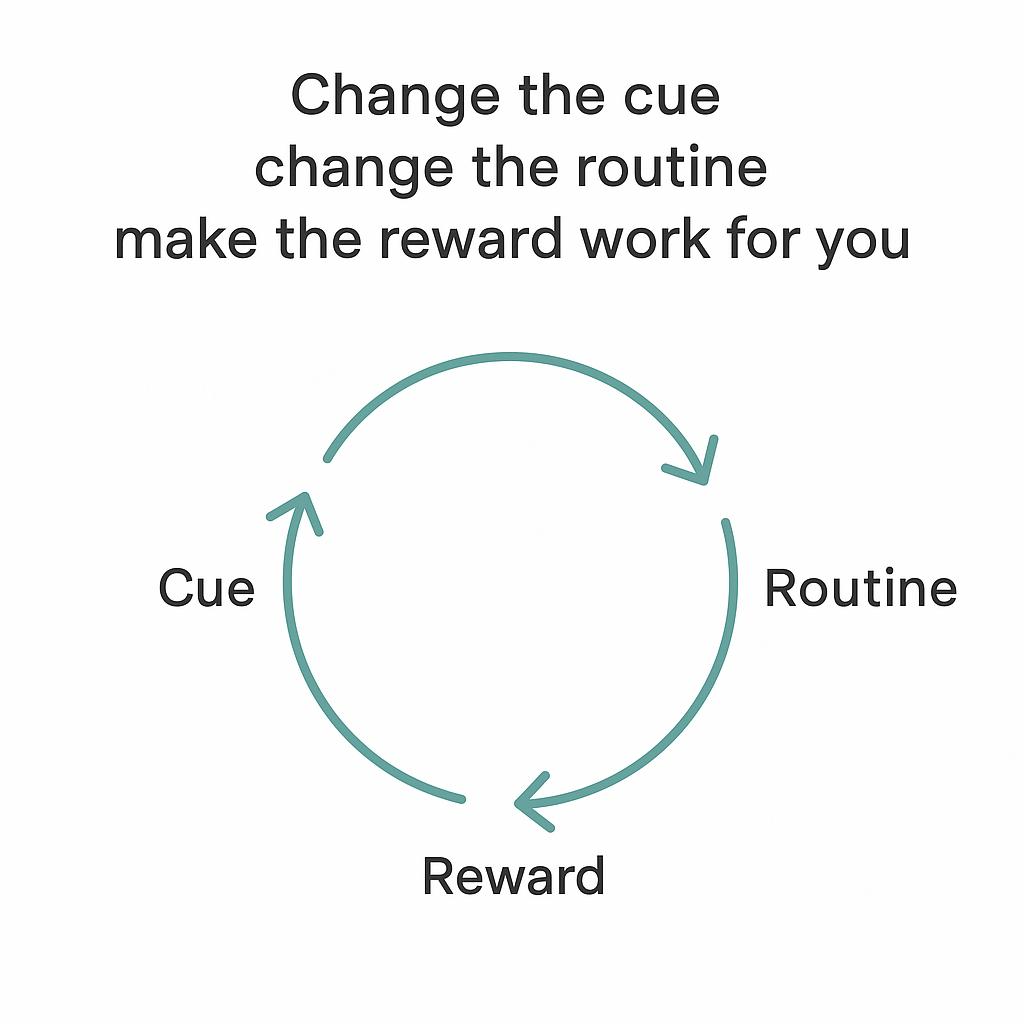
The fix is simple in theory: change the cue, change the routine, and make the reward work for you. Habits follow a loop. A cue starts the behavior. A routine is the action. A reward is what your brain gets from it. If you want to stop a bad habit, you need to make the old routine harder and the new routine easier.
Research shows habit automaticity often takes about 59 to 66 days on average, but harder habits can take much longer. The goal is not perfect streaks. The goal is steady reps in the same context.
What this guide will help you do:
- Identify your triggers and cues
- Break bad habits with friction and better defaults
- Build good habits with if-then plans, tiny starts, and fast rewards
- Track progress so habits actually stick
1. Start with one habit and one replacement
Do not try to fix everything at once. Pick one bad habit and one replacement habit.
Instead of saying, “I will stop doing X,” use this rule:
When X happens, I will do Y instead.
That gives your brain a new action to follow.
Examples
- Late-night scrolling → leave phone outside the bedroom and read 2 pages
- Afternoon snacking → drink water and eat protein first
- Skipping workouts → put on gym clothes and do 2 minutes
- Stress smoking or vaping → take 10 slow breaths and walk for 5 minutes
- Impulse buying → wait 24 hours before buying
A good replacement is:
- easy
- specific
- available right away
- possible in public
2. Find your cues and triggers with a habit loop check sheet
If you do not know what starts the habit, you cannot change it. Use a habit loop check sheet for 3 to 7 days.
Track this:
| Time | Place | Who was there | Mood | What happened right before | What I did | What I got from it |
|---|
How to use it
- Pick one bad habit.
- Every time it happens, write down the details.
- Look for patterns after 3 to 7 days.
- Circle the cue that shows up most often.
What to look for
- Time-based cues: after lunch, late night, 3 p.m. slump
- Emotional cues: stress, boredom, anxiety, tiredness
- Place cues: sofa, desk, bed, kitchen
- People cues: being alone, being with certain people
- Object cues: phone, snacks, laptop, shopping app
Common habit examples
| Bad habit | Likely cue | What to write down |
|---|---|---|
| Excessive social media | boredom, phone ping, downtime | time, app alert, mood, where you were |
| Unhealthy snacking | low energy, desk work, kitchen access | hunger, stress, snack location |
| Impulse buying | stress, ads, scrolling shopping sites | mood, site, time, payment method |
| Procrastination | overwhelm, task fear, starting a hard file | what task you avoided and what you did instead |
| Negative self-talk | fatigue, alone time, after a mistake | what happened before the thought started |
Quick cue questions
- What time does it happen?
- Where am I?
- Who am I with?
- What emotion shows up first?
- What happens right before the habit?
3. Use friction and environment to make bad habits harder
Willpower is weak when a habit is automatic. Environment matters more.
For late-night screen time
- Put the TV remote in a drawer or closet
- Put your phone in another room at night
- Turn off notifications
- Keep devices away from the bed
- Put a book where the remote used to be
For unhealthy eating
- Do not buy junk food in the first place
- Keep fruit and vegetables at eye level in the fridge
- Put less healthy food out of sight
- Use smaller plates and bowls
- Keep the TV and couch away from the kitchen if mindless eating is a problem
For skipping workouts
- Lay out gym clothes the night before
- Put your gym bag by the door
- Keep weights or exercise gear visible
- Exercise at the same time each day
- Make sitting and scrolling less comfortable than getting up
Easy friction moves you can use now
| Bad habit | Friction idea |
|---|---|
| Late-night screen use | charge phone outside the bedroom |
| Unhealthy eating | remove snacks from the house |
| Skipping workouts | pack clothes and shoes before bed |
| Impulse buying | delete saved cards and log out of shopping apps |
| Procrastination | block distracting sites and open the task file before you sleep |
4. Use if-then plans for real-life habit traps
If-then plans work because they remove the need to decide in the moment.
Use this format:
If [cue], then I will [tiny action].
For procrastination
- If I sit at my desk, then I will open the project file.
- If I close my work laptop at noon, then I will work on the task for 5 minutes.
- If it is Sunday after breakfast, then I will start my study session right away.
- If I feel stuck, then I will write one sentence and keep going.
For financial discipline
- If I get paid, then I will move 20% into savings before spending.
- If I want to buy something online, then I will wait 24 hours and check my budget.
- If I feel stressed and want to shop, then I will take a 5-minute walk instead.
- If it is payday, then I will close shopping apps for the week.
For food habits
- If I want a snack, then I will drink water first.
- If I open the fridge after dinner, then I will choose fruit or yogurt.
- If I feel bored, then I will wait 10 minutes before eating.
For phone habits
- If it is 9 p.m., then I will plug my phone in the kitchen.
- If I get into bed, then I will leave my phone on the charger.
- If I unlock my phone for no reason, then I will put it back down.
5. Start with the 2-minute version
The easiest way to build a habit is to make it too small to refuse. Start with a version that takes 2 minutes or less.
1. Exercise
2-minute version:
- Put on workout clothes.
- Put on shoes.
- Walk to your exercise space or step outside.
- Stop there if needed.
How to build up:
- Week 1–2: just show up and move for 2 minutes
- Week 3–4: add one walk around the block or one short set
- After that: add time only when the habit feels normal
2. Meditation
2-minute version:
- Sit down.
- Take one slow breath in through your nose and out through your mouth.
- Notice your body.
- Notice sounds around you.
- Stop after 2 minutes.
How to build up:
- Start with short daily sitting
- Add one more minute every few days
- Keep the same place and time if possible
3. Learning a new skill
2-minute version:
- Open the book, lesson, or notes.
- Read 2 pages or one short section.
- Highlight one key point.
- Close it.
How to build up:
- Add 1 more page after a week of consistency
- Then move to 5 minutes
- Then increase only when it feels easy to start
4. Mindful eating
2-minute version:
- Look at the food before eating.
- Notice the smell.
- Take one small bite.
- Chew slowly.
- Put the utensil down between bites.
How to build up:
- Practice with one meal or snack a day
- Add a few more slow bites each week
- Use it most often with meals you rush through
5. Daily planning
2-minute version:
- Ask: “What is the one thing I need to do today?”
- Write it down.
- Choose the first step.
- Set a reminder or leave it where you can see it.
How to build up:
- Plan one task daily for a week
- Then add a second task
- Keep the plan short enough that you will use it
6. Stack the new habit onto something you already do
Format:
After I [current habit], I will [new habit].
Examples:
- After I brush my teeth, I will floss one tooth.
- After coffee starts brewing, I will write one line in my plan.
- After I sit at my desk, I will open my task list.
- After lunch, I will walk for 5 minutes.
- After I plug in my phone, I will read 2 pages.
This works because you are attaching the new habit to an existing cue.
7. Make the reward happen right away
Your brain learns faster when the reward comes soon after the action. The reward does not need to be big. It needs to be fast and clear.
Clean reward ideas by habit type
| Habit type | Reward ideas | Tools |
|---|---|---|
| Physical | tea, shower, bath, one square of chocolate, checkmark on tracker | jar of beans, paper tracker, habit app |
| Digital or learning | streak counter, points, badge, progress bar, “done” check | spreadsheet, app, digital punch card |
| Mental | short walk, music, quiet break, journal note, pride from checking it off | notebook, tracker, timer |
How to customize rewards
- Pick something you actually like
- Keep it immediate
- Make it match the habit
- Do not use a reward that cancels the habit
Good examples
- After a workout: hot shower or tea
- After studying: 10 minutes of music
- After meditation: coffee break or quiet time
- After planning: checkmark plus a short pause
Bad example
- Rewarding a healthy meal with junk food
- Rewarding exercise with a night of binge scrolling
A simple rule: the reward should support the habit, not fight it.
8. Track the action, not just the result
Do not wait for the scale, the bank balance, or the perfect mood. Track the behavior itself.
| Habit | Mon | Tue | Wed | Thu | Fri | Sat | Sun |
|---|---|---|---|---|---|---|---|
| 2-minute workout | ✅ | ✅ | ❌ | ✅ | ✅ | ✅ | ✅ |
| Phone out of bed | ✅ | ✅ | ✅ | ❌ | ✅ | ✅ | ✅ |
Keep tracking simple
- Use yes/no
- Track 1 to 4 habits max
- Review once a week
- If you miss a day, restart the next day
Restart line:
I missed yesterday. Today I do the smallest version and move on.
9. Plan for slips before they happen
One miss is normal. Two misses in a row can turn into a new pattern.
Use this reset:
- Name the trigger.
- Make the next step easier.
- Do the smallest version today.
Example:
Missed a workout? Put on workout clothes and walk for 5 minutes. That keeps the habit alive.
10. Lock the habit into identity
Do not start with “I am perfect.” Start with proof.
Say:
- I am a person who moves daily.
- I do not smoke.
- I handle money well.
- I plan my day before it runs me.
- I keep my phone out of my bed.
Say it after the action, not before. The behavior comes first.
11. Keep your setup stable
Habit change gets easier when the cue stays the same.
Good setup basics
- Keep tools visible
- Prepare the night before
- Use the same time each day
- Remove one barrier
- Make the good choice the easy choice
Simple defaults
- Shoes by the door
- Water bottle on the desk
- Book on the pillow
- Healthy snacks in front
- Distracting apps blocked during work hours
12. Know what progress looks like
| Time | What is normal |
|---|---|
| Week 1 | awkward, easy to forget |
| Weeks 2–4 | less effort, still needs attention |
| Around 2 months | more automatic for many habits |
| 3+ months | stronger habit if you kept repeating it in the same context |
Do not expect speed. Expect repetition.
13. A simple 7-day start plan
| Day | Action |
|---|---|
| Day 1 | Pick one bad habit and one replacement |
| Day 2 | Track cues with the habit loop sheet |
| Day 3 | Add friction to the bad habit |
| Day 4 | Write your if-then plan |
| Day 5 | Start the 2-minute version |
| Day 6 | Add a clean reward |
| Day 7 | Review patterns and plan next week |
FAQs
What is the 21/90 rule for habits?
The 21/90 rule says it takes 21 days to build a habit and 90 days to make it a lifestyle. That is a rough idea, not hard science. Real habit formation varies by person and habit. Many habits take about 59 to 66 days on average, and harder habits can take longer. Use 90 days as a useful goal, not a promise.
What is the 3-day rule to break a habit?
The 3-day rule means trying to avoid a bad habit for three days in a row to break the immediate loop. It can help as a short reset, but it is not a full solution. The stronger fix is to change the cue, add friction, and replace the routine.
What are the 3 R’s of habit?
The 3 R’s are Reminder, Routine, and Reward. A reminder starts the habit. The routine is the behavior. The reward makes your brain want to repeat it. This is a simple way to understand the habit loop.
What are the top 5 bad habits?
Common bad habits include:
- Excessive screen time
- Poor sleep habits
- Unhealthy eating
- Too little movement
- Stress-driven habits like smoking, vaping, or impulse spending
Each one has a cue, a routine, and a reward. That is why the same habit tools work across all of them.